Basic Info.
Model NO.
CAS NO.: 501-36-0
Name
Polygonum Cuspidatum Extract
Odor&Taste
Characteristic
Extraction Type
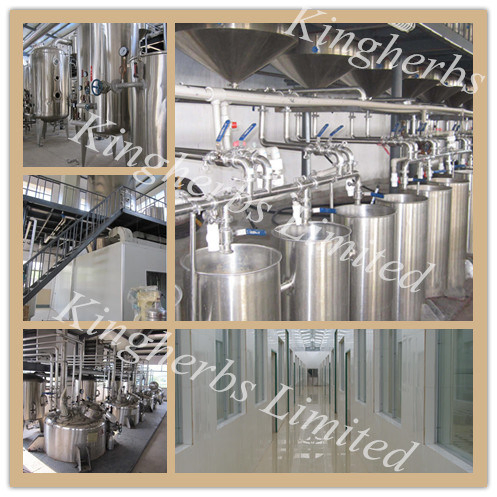
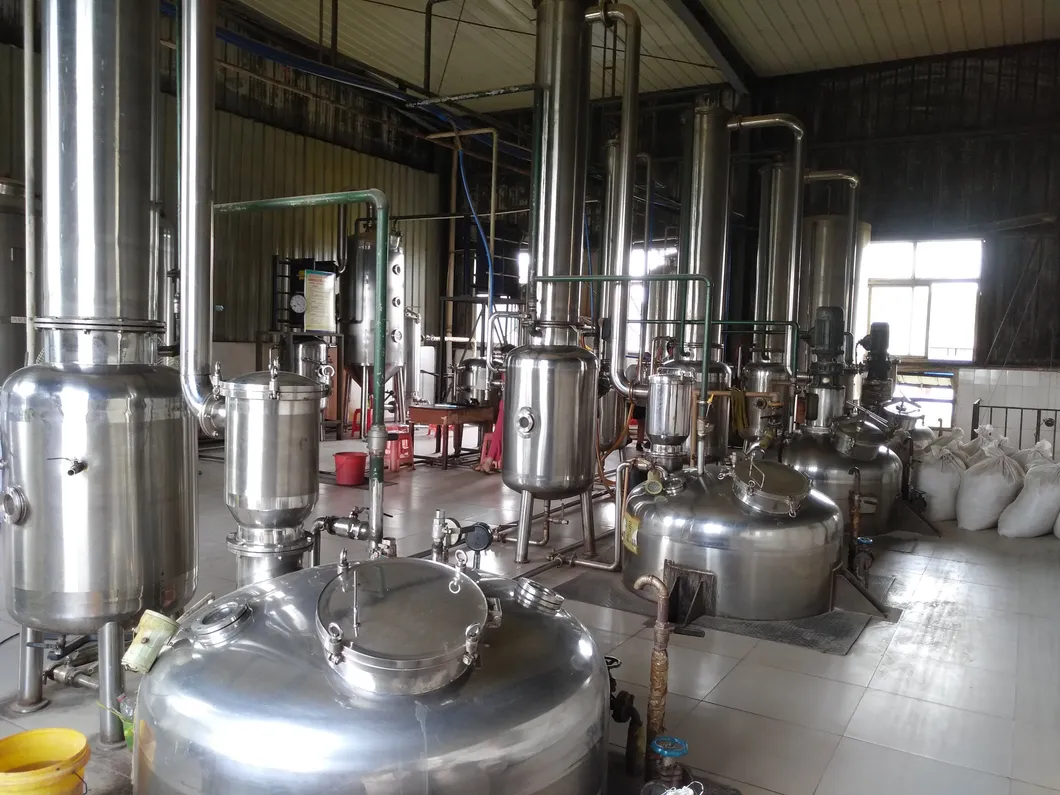
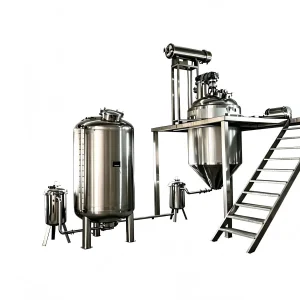
Solvent Extraction
Sieve Analysis
95% Pass Through 80 Mesh Sieve
Latin Name
Rhizoma Polygoni Cuspidati
Function
Anti-Cancer and to Strengthen Immunity
Transport Package
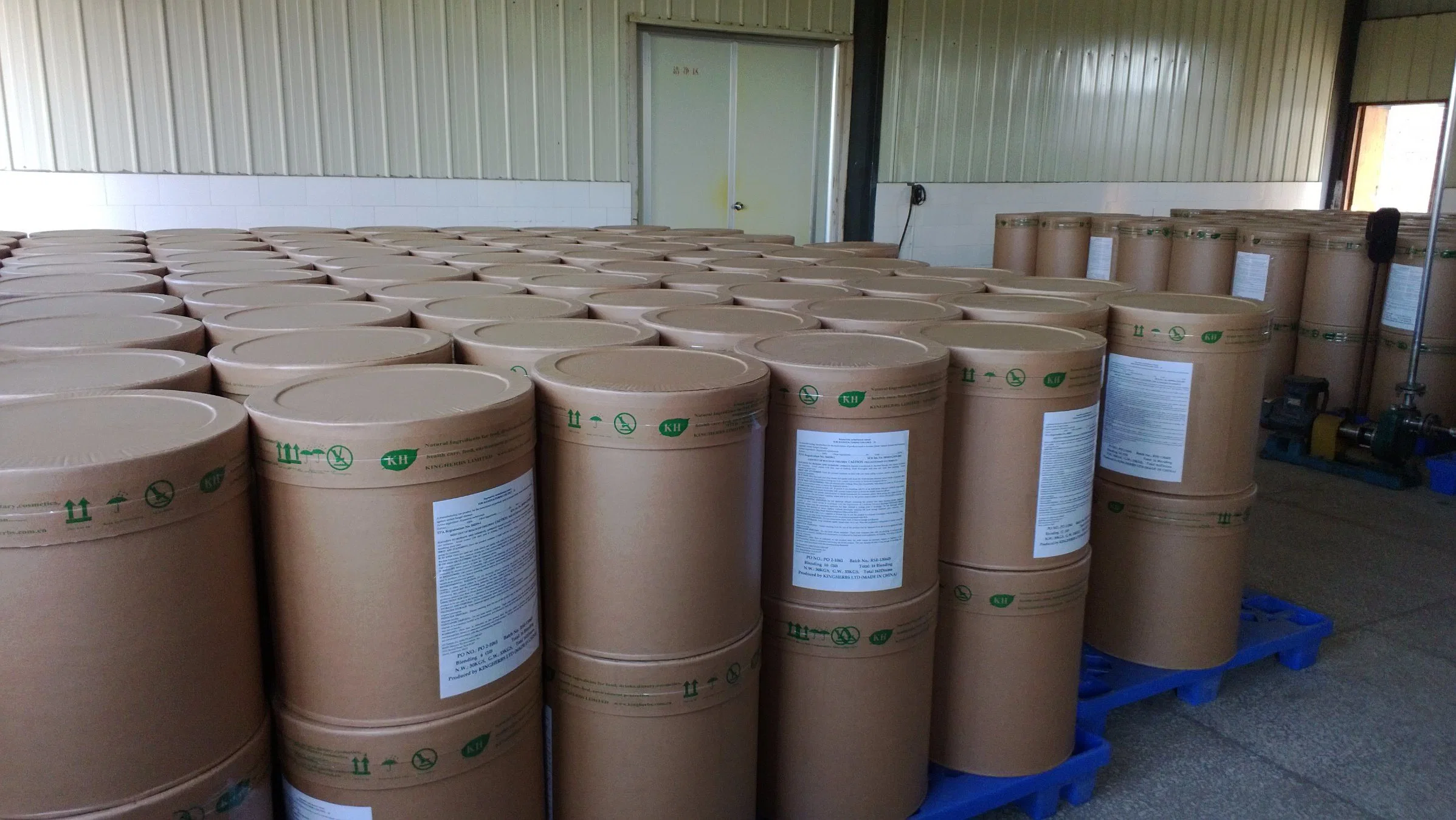
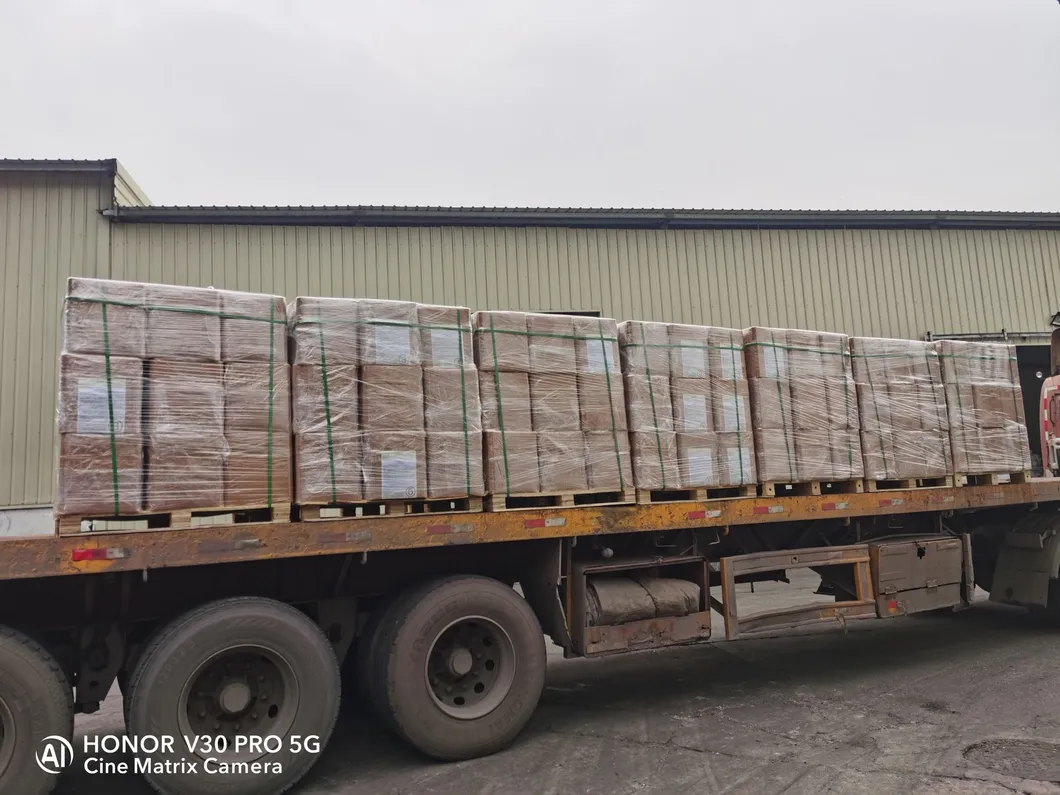
in Fiber Drum, LDPE Bag Inside. N. W.: 25kgs/Drum
Specification
ISO 9001, Kosher Certificate
Production Capacity
500kgs/Month
Product Description
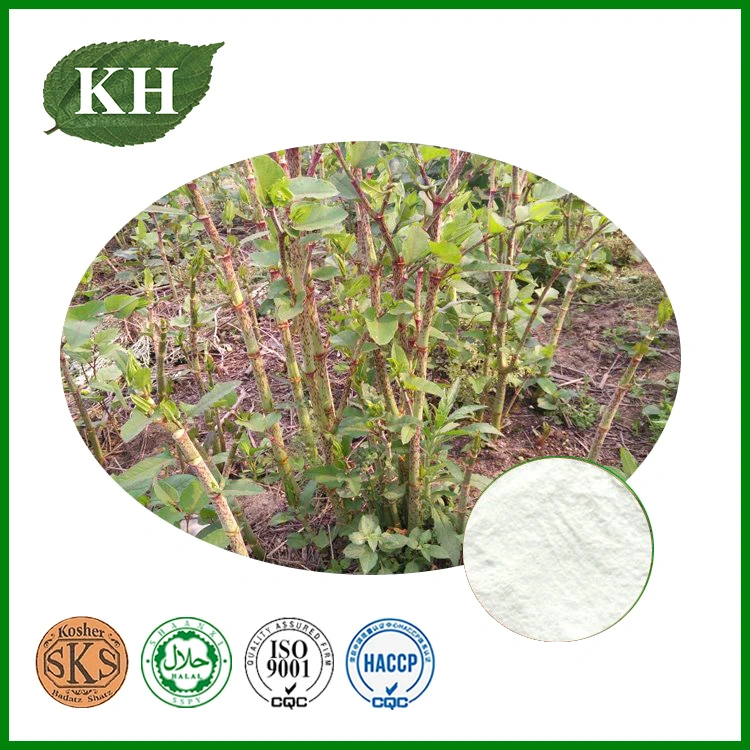
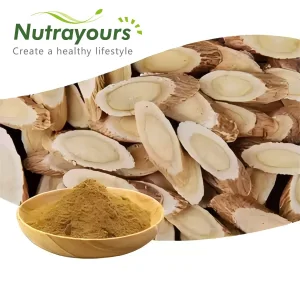
Polygonum Cuspidatum Extract
Botanical Source: Polygonum cuspidatum; Reynoutria sachalinense
Part used: Root
Specification:
- Resveratrol 98% HPLC
- Polydatin 1%--99% HPLC
- Physcion 1% min. HPLC
- Emodin 1% --60% HPLC
Description
The protophyte of Polygonum is regarded as rhizome and root of Polygonum cuspidatum Sieb. et Zucc., perennial herbaceous, being one of the Chinese medicinal herbs most in use in ancient China.
Cultivation
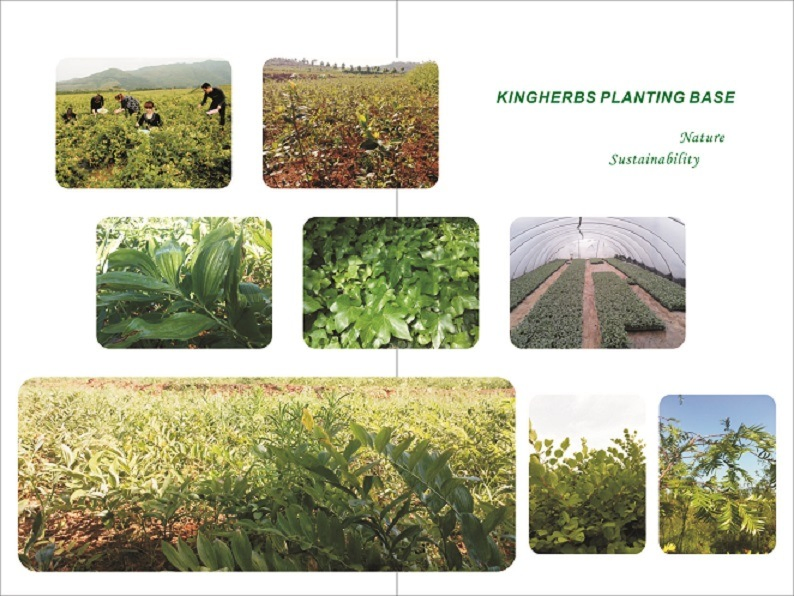
Fond of warm weather in nature, Polygonum better grows in moist & loose soil. Choose the arenaceous soil rich of humus when cultivating. It's also suitable to be cultivated by the ditch, in woodland of the hillside, and in front of or behind the house. Before soil preparation, apply tens of Kg of organic fertilizer per Mu. Plough the fields deep to 20-30cm. Prepare the earth as bed after ploughing.
Harvest
Administration by root and rhizome, Polygonum can be digged both in spring and autumn. Root-like stem and stem, leaf are better to be gathered during spring and summer. And the root is better to be gathered in spring and autumn. Cut it to pieces while fresh after cleaning and then leave to dry in the sunshine. Those with strong root and non-withered inside are considerably as good ones. Remove the fibrous root and the tail, cut to pieces after cleaning, leave to dry in the sunshine, keep in dry places. Be cautious of mould-proof & worm-eaten. Prepared small pieces should be stored in wooden case and jar.
Distribution
Polygonum most grows in ravine, by the river and in shady-warm places under trees, mainly distributed in the south of Changjiang River, Shan'xi, Henan and Shandong provinces in China.
The Main Chemical Composition
There are mainly anthraquinones, stilbenes, flavonoids, naphthoquinone, polysaccharides, amino acids and trace elements in Polygonum Cuspidatum.
- Anthraquinones: With two classifications in Polygonum:
1). dissociative chinones: Mainly as emodin, chrysophanol, rhein, physcion, questin & fallacinol.
2). anthraquinonic glycoside: mainly as physcion-8-ß-D-glucoside & emodin-8-ß-D-glucoside.
- Flavonoids: Flavonoids in Polygonum contains glucofrangulin, quercetin, quercetin-3-arabinoside, quercetin-3-rhamnoside, quercetin-3-glucoside, quercetin-3-galactoside, luteolin-7-glucoside & three kinds of derivative of protocatechuic acid, (+)-catechin, 2,5-dimethyl-7-hydroxychromone in apigenin.
- Naphthoquinone & anthraquinonic glycoside: There are 2-methoxy-6-acetylmethyljuglone & torachrysone-8-O-D-glucoside in naphthoquinone & anthraquinonic glycoside, which are isolated from Polygonum.
- Other ingredients: There are 7-hydroxy-4-methoxy-5-methylcoumarin in Polygonum. Polygonum still contains of free amino acids, and inorganic elements such as Cu, Fe, Mn, Zn, K, Se & Mo, further with palmitate, stearic acid and arachidonic acid.
Functions
Efficacy & mechanism to anti-cancer and to strengthen immunity: Resveratrol in Polygonum is the major active ingredient, which has effect to anti-cancer and to strengthen immunity through research. Resveratrol has very strong effect to clear oxidant free radical, along with inhibiting the damage and mutation to the body caused by free radical. Resveratrol has the optional power to cancer cells.
Resveratrol can inhibit protein tyrosine kinase, which is the material to make catalysis of tyrosine. Resveratrol's inhibition to protein tyrosine kinase is due to act on anti-mutation by inhibiting the function of kinase. The mechanism is mainly to inhibit the synthesis of cells of DNA and RNA.
Resveratrol has very strong inhibition to the reaction of lipid peroxidation caused by free radical system, also stronger inhibition to lipid peroxidation on the model of artificial cell of lecithin lipid. It can obviously reduce the content of MDA in the tissues, increase the activation of SOD, CAT and GSH-px, thus with protective effect to cerebral anaemia and tissue damages.
Resveratrol may strengthen the immunity. It can also recover the inhibited characteristic of cells in the burnt rat, with effective power to the reactive ability of damagedantigen singal, to breeding ability, to synthetic ability of white blood cell medium II and to synthetic ability of antibody through lymph cell.
Certificate of Analysis (COA)
| COA Specification Sheets |
| Product Name |
Polygonum Cuspidatum Extract |
Batch Number |
PCE-170831 |
| Botanical Source |
Polygonum cuspidatum |
Batch Quantity |
100kgs |
| Plant Part Used |
Root, 100% Natural |
Country of Origin |
China |
| Type of Product |
Standard Extract |
Active Ingredient Markers |
Resveratrol |
| Identification |
Positive |
Conforms |
TLC |
| Appearance |
Fine White Powder |
Conforms |
Visual test |
| Odor & Taste |
Characteristic |
Conforms |
Organoleptic test |
| Bulk Density |
20-45g/100ml |
Conforms |
ASTM D1895B |
| Particle Size |
NLT 98% through 80 Mesh |
Conforms |
AOAC 973.03 |
| Solubility |
Soluble in ethanol & water solution |
Conforms |
Visual |
| Assay |
NLT 98% Resveratrol |
98.10% |
HPLC |
| Loss on Drying |
NMT 1.0% |
0.50% |
5g / 105ºC / 2hrs |
| Ash Content |
NMT 0.5% |
0.08% |
2g / 525ºC / 3hrs |
| Extract Solvents |
Ethanol & Water |
Conforms |
/ |
| Solvent Residues |
NMT 0.05% |
Conforms |
USP-GC |
| Excipients |
None |
Conforms |
/ |
| Heavy Metals |
NMT 10ppm |
Conforms |
Atomic absorption |
| Arsenic (As) |
NMT 1ppm |
Conforms |
Atomic absorption |
| Lead (Pb) |
NMT 1ppm |
Conforms |
Atomic absorption |
| Cadmium (Cd) |
NMT 1ppm |
Conforms |
Atomic absorption |
| Mercury(Hg) |
NMT 0.1ppm |
Conforms |
Atomic absorption |
| 666 |
NMT 0.1ppm |
Conforms |
USP-GC |
| DDT |
NMT 0.5ppm |
Conforms |
USP-GC |
| Acephate |
NMT 0.2ppm |
Conforms |
USP-GC |
| Methamidophos |
NMT 0.2ppm |
Conforms |
USP-GC |
| Parathion-ethyl |
NMT 0.2ppm |
Conforms |
USP-GC |
| PCNB |
NMT 0.1ppm |
Conforms |
USP-GC |
| Aflatoxins |
NMT 0.2ppb |
Absent |
USP-HPLC |
| Sterilization Method |
High temperature & pressure for a short time of 5~10 seconds |
| Microbiological Data |
Total Plate Count < 1,000cfu/g |
<100cfu/g |
GB 4789.2 |
| Total Yeast & Mold < 100cfu/g |
<30cfu/g |
GB 4789.15 |
| E. Coli to be negative |
Negative |
GB 4789.3 |
| Staphylococcus to be negative |
Negative |
GB 4789.4 |
| Salmonella to be absent |
Absent |
GB 4789.10 |
| Packing and Storage |
Packed in fiber drum, LDPE bag inside. Net weight: 25kgs/drum. |
| Keep well sealed, away from moisture, strong heat and sunlight. |
| Shelf Life |
2 years if sealed and stored in the recommended conditions. |
Frequently Asked Questions (FAQ)
What is the botanical source of this Polygonum Cuspidatum Extract?
The extract is derived from the roots of Polygonum cuspidatum and Reynoutria sachalinense.
What are the primary active ingredient specifications available?
The primary specifications include Resveratrol 98% HPLC, Polydatin 1% to 99% HPLC, Physcion 1% min. HPLC, and Emodin 1% to 60% HPLC.
How is the raw material cultivated and harvested?
It grows in warm weather and moist, loose, organic-rich arenaceous soil. Roots and rhizomes are harvested in spring and autumn, then cleaned, sliced, and sun-dried.
What are the main health functions of the Resveratrol in this extract?
Resveratrol helps clear free radicals, acts as a strong antioxidant, supports anti-cancer mechanisms by inhibiting protein tyrosine kinase, and strengthens the overall immune system.
What is the packaging specification and shelf life of the product?
The extract is packaged in fiber drums with LDPE bags inside, with a net weight of 25kgs per drum. Its shelf life is 2 years when stored in a well-sealed container away from moisture, heat, and direct sunlight.
Does this extract contain any excipients?
No, this standard extract contains no excipients and is 100% natural.
 Rubrum Biologics